
Colleges are among the major supporters of jazz across the country, not just because there are many schools now where musicians can study jazz. Major, and not-so-major, jazz musicians supplement their income teaching. But colleges are also routine sites for jazz concerts--good gigs. And very often when someone comes to play, they put on some kind of clinic or workshop for musicians.
Those can be as valuable to the musicians in school as the courses they’re taking.
Once upon a time, jam sessions abounded for musicians. They cut their teeth and learned there. They got their asses kicked and walked out with their tails between their legs too. But that was also learning. Rebounding from that was important. That’s almost gone these days. But encounters with musicians in workshops brings an added value to their education.
Recently, in conversations with trumpeter Ambrose Akinmusire and drummer Eric Harland, both mentioned how musicians came to their college or high school brought valuable information about the music. Of course, they’re not alone. Many others have told me how much THEY learn when they teach. Give and take. Very cool.
So last week (April 1), I got the opportunity to sit in on a workshop at Skidmore College in Saratoga Springs, NY, given by some first-rate jazz folks. It was a great experience for me, let along the young musicians in the audience. I was there to shoot video for the eyeJazz program of the Jazz Journalists Association (subject for a future blog) and am in the process of producing a short video of the session. But there was so much that won’t get covered.
Involved was John Medeski of the world renowned Medeski, Martin & Wood band. He was in town to do a concert at the college with his former teacher, Albany, NY, jazz pianist Lee Shaw and her fine trio: the wonderful bassist Rich Syracuse and stellar drummer Jeff Siegel. All four cats had words of wisdom for the students.
It was their enthusiasm and genuine caring that stood out most for me. They met in the lobby, each one trickling in separately, and talked on the fly about how they would approach it. Just like good jazz, made up on the spot.
Then they took it to the kids and handled it with great flair. They spoke about communication, listening, persevering. They addressed being critical. And being free. And the points were peppered by Syracuse and Medeski with amusing anecdotes that had purpose behind them. They listened to students play and gave constructive criticism. Shaw played with a student trio. Medeski, Syracuse and Siegel performed an original written by a young pianist in attendance. They’d played never seen the music before, naturally. A few minutes earlier the young man and two or his classmates played the piece. And very nicely. But the pros brought it to a new level, off the cuff, before the enthralled group.
The point here isn’t to rehash the educational tidbits. Just to relate how uplifting the session was and the sincerity of each instructor. Passing it on. That’s always been key to jazz and blues, which are at the root of it all. The methods might be different -- classrooms compared to jam sessions or after-hours assemblies -- but the feeling is the same. Learn. Grow. Don’t be afraid to put yourself out there.
As Syracuse opined, “Be fearless.” Medeski said as a youngster he experienced “certain realizations … things that people told me that changed my perspective and enabled me to grow faster and be more familiar with my own style, my own voice. All those things are important to share, to help people find that. It’s real easy to get on the wrong track.”
Nice when veterans like this can take the time and help others with such things. And it’s nice that a lot of jazz musicians seem to do it regularly.
Tuesday, April 5, 2011


Wednesday, March 2, 2011
Sonny Rollins Honored at the Whitehouse

The Man, who personifies art, gets a medal for it. At last.
“Jazz is life,“ the legend, Sonny Rollins, told me a couple of years back. “It's what happens every minute of every day. It's fresh and new. Creative, just like life itself.”
It’s kind of a summary, and yet the tip of the iceberg with Sonny, who at age 80 is still going strong. Breathing fire. Shaking tree limbs to see what falls. Taking what comes through his head and heart -- and soul -- and shaping it into beautiful and astounding sounds that spring from the bell of his tenor saxophone. Joyous. Dark. Expressive. Exploring.
Sonny Rollins is still the man. The grand master of all the genre, bar none. The reigning shaman. He’s got legions of fans around the globe. He’s revered in the jazz world.
[Photo © R.J. DeLuke, Sonny at Newport in 2008]
And today he was honored at the White House when he was bestowed with the National Medal of Arts.
There were others, of course, a group of 10 that included the very deserving Quincy Jones and James Taylor. Actress Meryl Streep. Some other cats.
But my bow goes to Sonny. He’s above them all (even though media accounts will list him among “others awarded…” What the fuck is that? Ok…ok…I know what that is.)
No one is more deserving. He’s our kind and he’s still going strong. No figurehead, he.
Last year pianist Mark Soskin related to me how he on the phone with Sonny at about 11:30 at night, discussing an upcoming gig he was to play with the sax titan. Sonny was practicing his horn.
On top of being a great musician, he’s a highly evolved man. Great guy. My encounters with him are always warm and he always has a personal touch, usually asking about Saratoga Springs and the Albany area (he doesn’t live all that far away). In fact, he can talk about anything, pretty much, and isn’t shy with his opinions. (Nor is he pushy with them).
He takes life as it comes and tries to help people deal with its vagaries through his music.
On his website appears one short stateme4nt “I’m very happy that jazz, the greatest American music, is being recognized through this honor, and I’m grateful to accept this award on behalf of the gods of our music.”
He’s able to speak on behalf of the gods because he’s one of them. Has been for a long time. That’s my opinion (and the opinion of MANY), not Sonny’s. if, down in his heart, he knows that to be true, you won’t hear him say it. But I feel he knows his place. He walked shoulder-to-shoulder with Monk and Miles and Mingus and Coltrane and Blakey and Hawk. Bird and Diz. He and Trane shook up the world around the same time and they admired each other, the rivalry, he states, “more from our fans. We were good friends. Hanging out. Coltrane used to come by my house a lot. We were good, good personal friends. In fact, him and Monk, I think, were my closest friends, personal friends off the bandstand. Just as friends that I had in the music business.”
Sonny was one of those with the biggest stride, biggest footprint the golden age of jazz but has never stopped. “I don’t miss it,” he told me. “It’s just, that was the way it was. It was sort of the golden age. I was very fortunate to be alive in the golden age of music.”
I could write a lot more about the man, but rather than drag up our old conversations, I re-submit a story I wrote on the Man for All About Jazz not long ago, in 2009.
Congratulations, Sonny. Bravo.
Saturday, February 19, 2011
Eric Harland: Circle in the Round

The sublime drummer Eric Harland brought a band into Skidmore College’s Zankel Music Center in Saratoga Springs New York on Feb. 17 and put on a show that potentially will rank among the region’s best for 2011 by the time December rolls around. The musicians --Taylor Eigsti, piano; Chris Potter, sax; Julian Lage, guitar; Harish Raghavan, bass -- are all part of New York City’s vibrant jazz scene, based in Brooklyn these days.
All but Raghavan are leaders in their own right, and Harish can be found playing with Kurt Elling, Kendrick Scott’s Oracle and any number of important gigs. Potter is one of the finest saxophonists out there. It was first performance with the group (Walter Smith can usually be found blowing with this band).
The music began by creeping in slowly, then swirled and twisted … and delighted. Performed like a suite. The fantastic, highly influential, pianist Jason Moran, a colleague of Harland’s from Houston, might have indirectly had some effect on this.
[Photo: Eric Harland band, Skidmore College]
“My music is a lot about segues,” Harland told me a couple weeks before the show. “It’s less about the composition itself. It’s about having a composition that allows the members of the band to fully be in the moment. I never liked having to be so caught up in a tune that I couldn’t live in the moment. … We have a thing. Me and Jason Moran say it all the time: circular. It means that everything rotates around you like the Earth. And the Earth goes around the sun. The same things happens between the band and the audience. Even within the band. What you give kind of comes back around and keeps moving around. I always felt like if the musicians on stage are too caught up in the music, what they’re doing on stage, they’re not really paying attention to the moment. Or the direction the music can take. As well as what the people in the audience will feel. Something kind of gets lost a little bit.”
Listening to the artistry of this band, those words came back to me. He succeeded in bringing about that concept.
It also called to mind a recent conversation with the renowned young trumpeter Ambrose Akinmusire. Moran produced Akinmusire’s very good new album that doesn’t come out until April.) A little while after acknowledging Moran as a major influence, he talked about music thusly: “I believe that composition--music in general--shouldn’t be exact. It shouldn’t be straight up and down. It should be a circle. That’s the way nature is. When you look at a tree, it doesn’t go click-click-click. It sways around. I try to capture that in my music.”
Harland’s show was superb. The music was seamless. It churned and twirled and was driven by Harland’s insistent and wide-ranging drumming, Raghavan’s muscular bass chops and even Eigsti playing percussive piano when not flowing up and down the keyboard. Potter would take the lead voice, blowing within the composition and improvising around. He showed his imagination and monster chops. The music would then slide to Lage, who then got the chance to add his colors. He was fiery, playing quicksilver runs over the wall of sound that were some of the most Methenyesque I’ve heard from the young guitarist. Visible was what Gary Burton saw in Lage a decade or so ago upon taking him under his wing.
Upon the completion of his statement, Eigsti would glides into the fray with both precision and polish. His energy matched the passion of his cohorts at all times. Excellent stuff. By the time the first set came to a close they were smiling, the smile of that satisfaction that comes over those who make the art. In this case--jazz--made on the spot.
Harland, who seems to play with everyone under the sun, has really got something here.
“I want to try something and I want to share with everyone who’s in this room right now. Not just allowing the music, the composition, take precedence and be something more important than the audience,” he said.
The next day, he and Raghavan went into the studio to do a trio record of John Nazarenko’s, an Albany, NY, area pianist who also teaches at Skidmore.
Harland praised Skidmore and its music program. The college not only gives young musicians a chance to learn, but they bring in good jazz musicians for performances, and also instruction. “I wish more people would support the arts,“ said the drummer. “So an artist doesn’t feel like they have to sell themselves … The true meaning of being an artist is being a artist. Being able to allow your mind to search into realms … that spiritual space. It’s been a thing throughout history that the artist has been able to breathe that energy back into the room to remind everyone this is who we are, where we come from. This is how we feel.”
He said it’s a lot harder for the artist today. “The visibility of the artist himself has been lost. They’re not able to deliver that anymore. It’s become the same old overly produced… it doesn’t offer anything. If it’s not overly produced, it’s not even thought out. The guys themselves on stage are frustrated. They’re not even in the zone, as artists, to feel free enough to allow themselves. They’re like, ‘I’ve got to do this, because if I don’t do this I won’t get enough gigs.’ It’s tricky.”
Alas. But Harland certainly breaks all that shit with this band. Creativity reigns. And his drumming is terrific, as so many band leaders know. He’s always busy playing with someone -- Charles Lloyd, Josh Redman, on and on.
“I feel like the drums was just a way in. I like to think of myself as a human being first. … My greatest love is life. I have a real love for life and spirituality. Oneness. Everything that encompasses. It doesn’t necessarily mean these things are religious or anything like that. From my perspective, it’s more about just being there. Paying attention to it. Being conscious of it. I feel like playing the drums gave me an avenue for people who wanted to listen. Most people are willing to listen, you have the opportunity to say something. I’m always grateful that I’m a drummer. It’s given me the opportunity to move forward into the things I really want to do. Which is to really reach people on different levels … I think you can go on and keep trying things. It’s so vast. There’s so many things you can do.”
He’s doing them, alright.
Monday, February 14, 2011
Freihofer's Saratoga Jazz Festival Should Be Stellar
Fest Creator George Wein returns to perform and be honored on Walk of Fame


Freihofer’s Saratoga Jazz Festival has announced its lineup for 2011, a marked improvement over last year’s edition, though there was plenty of good music last year. At the two-day, two-stage event, there is always good music, even if there are acts scattered in at times that are questionable. With all due respect to the big city festivals, a music festival held outdoors is the best, and the Saratoga Performing Arts Center (SPAC) in Saratoga Springs, NY, is ideal. It’s the way the Newport Jazz Festival was done from its inception.
No wonder, since George Wein, the icon who invented such outings and made the Newport event the flagship American festival, also started the Saratoga event in 1978.
[Photos © R.J. DeLuke, top: Ralph Lalama leads his band at SPAC's gazebo stage, 2010; bottom: Terence Blanchard's band plays the main stage in 2008]
When he thought he was retiring in 2007, Wein sold the Saratoga festival and his company. Regrettably, the company, which still had the Newport event, went to people who didn’t know what they were doing. They folded after financial troubles and it looked like there would be no Newport fest in 2009. George came back and brought it back to life. Both the 2009 and 2010 Newport festivals were tremendous.
As for good fortune, the Saratoga festival went to Danny Melnick, a former Wein employee, who, through his company Absolutely Live, produces the Freihofer in conjunction with SPAC. Melnick didn’t drop the ball. He’s done a damn good job, even in the face of a trouble U.S. economy.
One of the cool things about this year’s lineup is the return of Wein to Saratoga for the first time since he got out of the producing end of it. He’ll play with his Newport All-Stars, a group he does small tours with every year. He plays piano for the group that includes Howard Alden on guitar, Lew Tabackin on sax, Anat Cohen on clarinet, Randy Brecker on trumpet, Peter Washington on bass and Lewis Nash on drums. All are fine players. Wein played piano at the very first festival, sitting in with the New York Jazz Repertory company, a big band comprised of NYC veteran jazz cats. (A set by the group at last year’s Newport jazz fest was really nice).
He’s proud of the SPAC event. We spoke in 2009 about he revival of Newport, but discussion turned to Saratoga.
“That’s one we lost because I sold the company. They (SPAC) didn’t want to deal with the new company (Festival Productions). You lose things. The only thing that counts in business is to own things. Sometimes you can’t own things. You have to make deals.” he added with a chuckle, “I started a lot of things in my life. Some of them I have. Some of them I don’t.” He also spoke highly of Melnick
“That’s a beautiful sight up there. They have a constituency that focuses on what’s happening at the Saratoga Performing Arts Center … there’s a constituency that looks forward every year to the weekend before the Fourth of July. It’s like the beginning of summer up there when they do that event.” With parking, food and the spacious grounds it’s a perfect setting.
He thought back to the days in the late 1970s. “I was doing a festival in New York. My mind was restless. It’s a big job doing that. I wanted to get back to an outdoor feeling like Newport. I went up there and they said, ‘That’s great. Let’s do it.’” His wife, Joyce, said he should continue doing New York and Saratoga, “So I did both for years, with great success. It’s the best thing that ever happened, to do both of them … I wish those people good luck up there. They’re nice people. Sorry we don’t work with them any more, but that’s my fault, not theirs.”
He’ll be working there soon. At the piano bench. It’s billed as an 85th birthday celebration, and Wein will get a star on SPAC’s Walk of Fame.
The even is Saturday and Sunday, June 25 and 26, at SPAC. It runs from noon well into the evening. Two stages. Picnics. Arts and crafts tents. Smiling, happy people.
Other music that weekend will be from the terrific jack DeJohnette, whose band includes the fine young saxophonist Rudresh Mahanthappa; Eliane Elias; recent Grammy winner Dee Dee Bridgewater; The Bad Plus and a set called Sing the Truth! with Angelique Kidjo, Dianne Reeves and Lizz Wright, celebrating the legacies of Miriam Makeba, Abbey Lincoln and Odetta. For pop fans, Michael McDonald will likely be a crowd pleaser.
There are lesser known groups at this year’s event. But the music will be superb. Groups led by Ben Allison and David Binney turned in great sets at Newport last summer. They’ll no doubt do the same up here in Saratoga. Steve Cardenas, who plays guitar with Allison, will also do trio music. He’s a splendid player. Expect good things. The guitar trio of Lionel Loueke should also be remarkable.
Hilary Kole is a singer who is getting more comfortable in the jazz idiom, handling standards with style and flair. Marcus Strickland is a fine young saxophonist who’ll no doubt be playing with some of his outstanding peers from New York City, maybe his twin brother E.J. who plays drums with Ravi Coltrane, among others. He performed at Saratoga’s gazebo stage a few years back with Lonnie Plaxico’s band.
That’s not all. The full lineup, as well as all kinds of stuff about SPAC and TICKETS is available at the FESTIVAL WEBSITE.
Get your tickets…bring your blanket, lawn chairs, picnic baskets and coolers. Ohhhhhhhhhhh yeah.


Freihofer’s Saratoga Jazz Festival has announced its lineup for 2011, a marked improvement over last year’s edition, though there was plenty of good music last year. At the two-day, two-stage event, there is always good music, even if there are acts scattered in at times that are questionable. With all due respect to the big city festivals, a music festival held outdoors is the best, and the Saratoga Performing Arts Center (SPAC) in Saratoga Springs, NY, is ideal. It’s the way the Newport Jazz Festival was done from its inception.
No wonder, since George Wein, the icon who invented such outings and made the Newport event the flagship American festival, also started the Saratoga event in 1978.
[Photos © R.J. DeLuke, top: Ralph Lalama leads his band at SPAC's gazebo stage, 2010; bottom: Terence Blanchard's band plays the main stage in 2008]
When he thought he was retiring in 2007, Wein sold the Saratoga festival and his company. Regrettably, the company, which still had the Newport event, went to people who didn’t know what they were doing. They folded after financial troubles and it looked like there would be no Newport fest in 2009. George came back and brought it back to life. Both the 2009 and 2010 Newport festivals were tremendous.
As for good fortune, the Saratoga festival went to Danny Melnick, a former Wein employee, who, through his company Absolutely Live, produces the Freihofer in conjunction with SPAC. Melnick didn’t drop the ball. He’s done a damn good job, even in the face of a trouble U.S. economy.
One of the cool things about this year’s lineup is the return of Wein to Saratoga for the first time since he got out of the producing end of it. He’ll play with his Newport All-Stars, a group he does small tours with every year. He plays piano for the group that includes Howard Alden on guitar, Lew Tabackin on sax, Anat Cohen on clarinet, Randy Brecker on trumpet, Peter Washington on bass and Lewis Nash on drums. All are fine players. Wein played piano at the very first festival, sitting in with the New York Jazz Repertory company, a big band comprised of NYC veteran jazz cats. (A set by the group at last year’s Newport jazz fest was really nice).
He’s proud of the SPAC event. We spoke in 2009 about he revival of Newport, but discussion turned to Saratoga.
“That’s one we lost because I sold the company. They (SPAC) didn’t want to deal with the new company (Festival Productions). You lose things. The only thing that counts in business is to own things. Sometimes you can’t own things. You have to make deals.” he added with a chuckle, “I started a lot of things in my life. Some of them I have. Some of them I don’t.” He also spoke highly of Melnick
“That’s a beautiful sight up there. They have a constituency that focuses on what’s happening at the Saratoga Performing Arts Center … there’s a constituency that looks forward every year to the weekend before the Fourth of July. It’s like the beginning of summer up there when they do that event.” With parking, food and the spacious grounds it’s a perfect setting.
He thought back to the days in the late 1970s. “I was doing a festival in New York. My mind was restless. It’s a big job doing that. I wanted to get back to an outdoor feeling like Newport. I went up there and they said, ‘That’s great. Let’s do it.’” His wife, Joyce, said he should continue doing New York and Saratoga, “So I did both for years, with great success. It’s the best thing that ever happened, to do both of them … I wish those people good luck up there. They’re nice people. Sorry we don’t work with them any more, but that’s my fault, not theirs.”
He’ll be working there soon. At the piano bench. It’s billed as an 85th birthday celebration, and Wein will get a star on SPAC’s Walk of Fame.
The even is Saturday and Sunday, June 25 and 26, at SPAC. It runs from noon well into the evening. Two stages. Picnics. Arts and crafts tents. Smiling, happy people.
Other music that weekend will be from the terrific jack DeJohnette, whose band includes the fine young saxophonist Rudresh Mahanthappa; Eliane Elias; recent Grammy winner Dee Dee Bridgewater; The Bad Plus and a set called Sing the Truth! with Angelique Kidjo, Dianne Reeves and Lizz Wright, celebrating the legacies of Miriam Makeba, Abbey Lincoln and Odetta. For pop fans, Michael McDonald will likely be a crowd pleaser.
There are lesser known groups at this year’s event. But the music will be superb. Groups led by Ben Allison and David Binney turned in great sets at Newport last summer. They’ll no doubt do the same up here in Saratoga. Steve Cardenas, who plays guitar with Allison, will also do trio music. He’s a splendid player. Expect good things. The guitar trio of Lionel Loueke should also be remarkable.
Hilary Kole is a singer who is getting more comfortable in the jazz idiom, handling standards with style and flair. Marcus Strickland is a fine young saxophonist who’ll no doubt be playing with some of his outstanding peers from New York City, maybe his twin brother E.J. who plays drums with Ravi Coltrane, among others. He performed at Saratoga’s gazebo stage a few years back with Lonnie Plaxico’s band.
That’s not all. The full lineup, as well as all kinds of stuff about SPAC and TICKETS is available at the FESTIVAL WEBSITE.
Get your tickets…bring your blanket, lawn chairs, picnic baskets and coolers. Ohhhhhhhhhhh yeah.
Tuesday, February 1, 2011
Joe Lovano Investigates Bird

Joe Lovano’s musical curiosity seems endless. Creativity is his credo. No what part of the forest he chooses to investigate, he’s always looking for creativity. It’s what he learned listening to the masters growing up, and playing with many of them over the years.
Now, of course, he is one of today‘s elite jazz musicians, one who‘ll in his autumn years will be hailed as one of those masters. But that’s later. Joe is in the here and now. He’s a dominant musician on the scene right now. Dominant in that he’s seemingly everywhere. Different groups, all excellent. Playing with McCoy Tyner. The SF Jazz Collective. On other relevant albums. But also dominant because his sound and approach are honest. Can’t be denied. They’ve deservedly swashbuckled themselves to the forefront of jazz for this millennium. Done through hard work and the force of sheer musical talent and an unceasing creative drive.
[Photo © R.J. DeLuke, Joe Lovano with Us Five at Newport Jazz Festival, 2009. (Esperanza Spalding on bass)]
He’s at it again with his latest CD, “Birdsongs,” a Charlie Parker tribute carried out with his superlative quintet, Us Five. All the songs are associated, written or inspired by Bird, the genius of the 1940s bebop scene whose music will always be one of the cornerstones of jazz. Lovano is one of the most influential players of his generation, the post-Coltrane era. But unlike a lot of tenor sax players, Lovano’s own roots can be heard going way back before that. He’s done his homework. At a concert two nights ago at The Egg in Albany, Lovano’s was on fire in a quartet with guitarist John Scofield. During the evening you could hear it all. Coleman Hawkins. Sonny Rollins. Trane. Bird. But all Lovano. His sound as robust as his personality, which is rich and full and welcoming. In that respect he’s achieved the ultimate jazz goal: playing and being yourself.
The disk, his 22nd for Blue Note (who he hell does that anymore??), meets the high standards everyone expects from Lovano. Us Five really has developed together as a band.
In a January conversation with Esperanza Spalding, a rising jazz star who also happens to be the bass player for Us Five, she couldn’t contain her enthusiasm for her boss and “Birdsongs.” She was in the midst of a weeklong gig playing that music with the band at the Village Vanguard.
“He did it again. It’s totally incredible. He sounds amazing as always. He’s always getting better. That’s so encouraging. I have the rest of my life to keep working at this,” she told me with palpable awe. “I’ve played with him now for about seven years. I see him and I hear him and I see his evolution as an artist in seven years. And I think to myself, ‘I hope to be like him one day.’ He keeps growing and evolving. Every new project he does is profound and beautiful.”
She added, “If I was going to say one person that really has been a huge source inspiration, it would probably be Joe.”
Even more recently, conversation with Lovano naturally shifted to Us Five. He was happy with the Vanguard gig. “Throughout the week we focused on 15 or so different tunes. Each set was completely different and shaped different. As far as the pieces we played and the flow and orchestration of it all. I’m not treating it like one tune at a time. I’m trying to put a set together that is an orchestration of the music within the structure of the set, which adds another element to the presentation.”
He reflected on Bird. “Drawing from the compositions and tunes Charlie Parker wrote and played. It’s such an inspiration. His tunes are standards in the jazz repertoire. To try to re-work them and shape them to how we play today … it’s a really rich environment to be in.”
Lovano listened to the music growing up. His father, noted Cleveland saxman Tony “Big T” Lovano, had all the records. Siren songs for so many jazz folk. “That was the language and vocabulary that really taught me a lot about my instrument. About music. And how to play with people,” said Joe.
“I never dreamt I would put a project together and focus on his compositions. But it was something that kind of evolved for me. It was beautiful. Especially with this band (Us Five) … We’ve been playing together over the last three or four years now. We primarily, started playing most of my original tunes. The throughout those years, including Billy Strayhorn’s music and Thelonious Monk’s music and Coltrane’s music, Miles’ tunes. Now Bird. Whatever the repertoire, there’s a personality and a way of playing that we’re developing within the structures of the tunes.
“To do a total focus on just Charlie Parker tunes was really fun. Very creative.”
The group is off to Europe in March but comes back to the States in April for more touring.
I’m not going to run through the CD … this is good, that’s good. Check it out. The music is today’s jazz at its best. Re-worked according to Lovano’s intuition and brought to life by a band sensitive to that vision.
Said Lovano, “Whether you’re listening to Ben Webster or Sonny Rollins or Wayne Shorter or Joe Henderson, people that are themselves within whatever song structure they’re playing on. You live with the elements of the music, then the repertoire that you love to play, that fuels your ideas just grows and grows throughout your lifetime. Classic music that in undeniably timeless. Beautiful harmonic structures and forms and melodies … you develop in a certain way, that if you didn’t experience those things, you wouldn’t become the musician that you could be.”
Let’s leave it at that.
Saturday, January 8, 2011
Grammys to Honor The Man: Roy Haynes


The annual Grammy Awards are a funny thing. Sometimes one wonders from what fishbowl they pulled out names to nominate for the awards. Sometimes real deserving folks win. But so much great music never any notice. And yet everyone would like one on their mantel, it only for the cachet.
But dammit if they didn’t do something right this year, selecting the masterful drummer Roy Haynes as a recipient of its Lifetime Achievement Award. Formal acknowledgment comes at the 53rd Grammys shindig on Feb. 13 (broadcast on CBS starting at 8 p.m. Eastern). He will be among a group that includes Julie Andrews and Dolly Parton.
Haynes is a titan. One of the most influential and respected drummers ever. He’s still winning Drummer of the Year awards in the jazz community and his bands COOK, driven of course by his fluid, intense, polyrhythmic drumming. He’s played with all the great over time from Bird to Miles to Trane, to today’s current crop of jazz royalty. He is that royalty. His own groups, usually with musicians young enough to be grandsons, are always notable. On the cutting edge and hip as hell -- just like Roy.
[Photos © R.J. DeLuke. Top: Roy at he 2010 Newport Jazz Fest playing with Chick Corea's Freedom Band; Bottom: Roy and bass legend Ron Carter take the Newport stage in 2009]
Watching him on stage, usually sporting some funky shades, you can’t believe his age. Older jazz masters still go out and play. Their speed on a horn might be slower, their ideas still rich, they play some choruses and then bow. The rest of the band contributes their solos. We loves those masters. Roy starts driving the band from the first beat. Pushing, coloring, twisting the music. Alive and edge. From the first note through the entire set. When others solo, Roy’s still going, providing a fire to light their improvisational pilot lights.
You can’t say that the years strip away on stage. Because back stage you might mistake him for a barroom bouncer, even with his short height.
And he’s soooooo cool. Mind like a steel trap he remembers stories from back in the golden days -- the 40s with Sarah Vaughan, playing with Bird, filling in for Elvin Jones with the John Coltrane Quartet. He talks hip. Walks hip. Dresses hip as hell.
In fact he recounted to me a few years back his first encounter with Miles Davis thusly: “When we met, which would have been 1945 when I came to New York, I was into corduroy, and when I met this guy he had corduroy pants on. We were both listed in Esquire magazine. We were the youngest at the time, which would have been 1960, an article written by George Frazier called ‘The Art of Wearing Clothes.’ We were the only musicians, and the youngest. People like Fred Astaire, Walter Pigeon, all of those guys were in it.”
(Sonofabitch if he wasn’t exactly right with the date etc. )
Here are some more quotes from my encounter with Haynes, with whom I freely admit I was in awe:
“When we get on the bandstand, we all become one age—the same age. It has nothing to do with how old you are or where you’re from, it’s what you can do musically”
How does he keep going? “It’s a combination of everything. The feeling that I’m getting from the audience. First of all, the feeling of the group. We do it together as one. We inspire each other. We give it to the audience and the audience gives it back to us. It’s a back and forth thing … Every time I appear some place, it’s a different project. There’s always something new and interesting happening. We strive for that each time. We can play the same tune and take it some place else. It involves a new project at that time.”
On the drums being an extension of himself: “It feels like it, playing over 60 years. I never thought I would be still playing. I never thought I would even live this long, to be (at the time) 82, you know. Yes, definitely an extension of me. My approach to the instrument, as well. The sounds I try to get out of the drums. The whole thing … I’m still young. I’m still listening.”
Around the same time I interviewed the incredible drummer, another titan, Jack DeJohnette. The subject of Roy came up:
“Roy Haynes has always been at the top. He’s one of my mentors. I always knew where he was coming from. He’s always been inspirational. You can always hear Roy and get inspired. He’s been there with all of them, Lester (Young) to Bird (Charlie Parker), to Coltrane. He’s been there and still going strong in his 80s. He’s a wonderful inspiration. Very original, very creative and always playing with younger musicians, which keeps him inspired. He’s always fresh. He’s not old.”
Indeed. Had the pleasure of seeing Roy with Chick Corea last year and with his own band the year before. He’s kicking ass and taking names.
Well deserved honor, to say the very least. Thanks to the Grammy people for noticing.
Saturday, December 4, 2010
Best of 2010

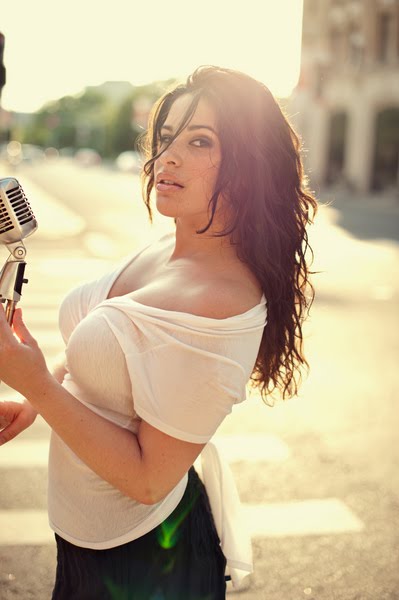
It’s that time again for being pestered about Top Jazz Albums of 2010 lists. I say “pestered” because it seems like a chore that doesn’t accomplish much other than give a tip of the hat to SOME of the outstanding music of the past year. So much music comes out these days that it’s impossible to give a good judgment to it all. It’s impossible to hear it all. And fine efforts by a lot of people go unnoticed. So many deserving folks and so many get short-changed.
(Ahhhhh. Lured you in with phots of lovely ladies. Hey--magazines do it all the time. Sue me).
[PHOTOS: top, Hilary Kole. bottom, Dana Lauren. Photos courtesy of the artists]
For myself, the challenges of memory contribute to some people not making my highlight reel. Better organization through the year might solve that little issue. Yeah, right. Like I’ll keep my glasses in the same spot all the time so I know where they are. Ummmmmm hmm.
So onward to the list -- something I don’t usually do, but it seems there is pulling from more sides this year than ever. So: Tossing my proverbial hat in the ring. These are not in any order.
Wallace Roney: If Only for One Night (High Note). Wallace is always first-rate and almost always passed over by the critics. He’s not the most media friendly guy. He’s a serious artist and his recordings are always excellent. This one is live and it’s hot shit.
Will Vinson: Stockholm Syndrome (Criss Cross). This one is recently out, so probably no one considered it. But it’s fine stuff from an alto sax player of fire and conviction. Good writer too. The band has Aaron Parks on piano and the ever-tasteful, ever creative Kendrick Scott on drums. (Kendrick is working on a record with his own band that should come out in 2011. Count me as putting it on my “best” list already….In case I …er…forget).
Dave Holland: Pathways (Dare 2). Like Roney, everything Holland does is excellent. The band is crazy good, reflected accurately on the disk.
Christian Scott: Yesterday You Said Tomorrow (High Note). Hasn’t taken a bad step yet in his young career. His music springs from jazz, but with modern sensibilities reflective of his own experiences. He will grow into a musician for the ages.
Paul Motian: Lost in a Dream (ECM): Cool improvisational trip with the unique drummer heading his trio. Jason Moran on piano is one of the fine improvisational minds of his peers and every chance to hear Chris Potter on sax is a good thing. Potter has unending spirit and seemingly endless chops.
Brad Mehldau: Highway Rider (Nonesuch). Another great disk from this extraordinary pianist. Great players, including the superior sax voice of Joshua Redman. Mehldau writes great music here and its execution is superb.
Roberto Magris: Mating Call (Jmood). This is another very good record from this pianist. He always send me his stuff from his home in Italy and it is consistently stellar. Each recording, he gets it right. This one is a small group with his fine piano, cool sax from Paul Carr (the D.C.-based sax man whose own CD, “Straight Ahead Soul” this year was pretty cool!) and the steady drumming of the underrated Idris Muhammad. Roberta writes good stuff.
Rudresh Mahanthappa/Bunk Green: Apex (pi): Two fine alto saxmen going at it, Rudresh one of the great young fresh voices,; Bunky one of the fine veterans.
Jeremy Pelt, Men of Honor, (High Note). Another fine disk from this fantastic trumpet player who always has great concepts when he plays. He's sourrounded by some of the outstanding younger guys on the scene, like J.D. Allen.
Holly Hoffman/Bill Cunliffe: Three’s Company (Capri): This intimate teaming could have put this under the radar. It’s not cutting edge, in your face. It’s a classy meeting of minds. Hoffman is one of my favorite flute players. “Too Late Now” is a great example.
Rachel Z, Omar Hakim/Maeve Royce: Trio of Oz. recently kind of shoved under the rug in recent high-profile jazz mag reviews, I think this music is fuckin’ sweet. Saw the group live this summer and they kicked ass. The record is true to that form. Hakim is a motherfucker pushing the music with polyrhythms that seem effortless. Rachael’s piano is also electric and Royce is strong. Just dig song 1, “Angry Chair,” and try not to be moved. A fine piano trio recording.
VOCALS: A few of the best this year were:
Hilary Kole: You Are There (Justin Time). This growing talent is matched up here with some of the finest jazz pianists--Kenny Barron and Hank Jones among them--for a series of duets on classic songs. Sweet! A record with much nuance and beautiful at each listen.
Dana Lauren: It’s You or No One (Dana Lauren Music). This newcomer shows great promise, negotiating these standards with style and some freshness as well. Strong instrument and great feel for the music. There’s more to come from Dana, who’s finishing up at Berklee School of Music. Good band too!
Julia Dollison, Kerry Marsh: Vertical Voices: The Music of Maria Schneider. (ArtistShare). This was a tremendous undertaking: Taking the complex, thrilling, majestic work of the brilliant Maria Schneider and her orchestra and using their voices as the lead instrument over just a rhythm section (albeit Maria’s rhythm section). Could have fallen from the mere daunting nature. They pulled it off, and very, very well.
LARGE BAND:
Two outings with foreign bands stand out.
Tim Hagans: The Avatar Sessions (Fuzzy Music). Tim’s great trumpet over the great Norrbotten Big Band of which he is artistic director. The music is all his too. Great stuff.
John Scofield: 54 (Universal Music Group). A bit unusual to have a guitarist as the solo voice over a huge big band, but Scofield is a wizard, putting his signature sound over the fine Metropole Orkest, with arrangements by the wonderful Vince Mendozza. Scofield can play anything. Rock, funk, blues, bebop … It all sounds great here.
HISTORICAL: This category used to be “reissues.” But a lot of the old stuff that comes out in new packages wasn’t released before. Anyway:'

Miles Davis: Bitches Brew 40th Anniversary Collection (Sony Legacy). The package that has all things Bitches Brew, everything you wanted to have about that seminal 1970 rock album but were afraid to ask for. The improvisational rock music is still unique and lasting. And there’s a brewery that made a special beer just for the anniversary. You fuckin’ kiddin me? If they named a beer after me I would never stop talking about it. [photo: the author with the Miles elixcir]
Stan Getz, Kenny Barron: People Time, The Complete Recordings. The original two-disk release of duets from these two masters was such a great pleasure. Is this anything but more? Suppose not. But it brings this music back in front of people. And more from these two would always be welcome. Beauty and class rolled into one. Just when you thought it had gone out of style.
Ray Charles. Genius = Soul = Jazz (Concord). The great one’s jazz inclinations rolled into a package. Ray could swing like hell and sing place his unique vocals in there to give them vibrancy and vitality. He admired jazz. Vice versa.
Wow. That wasn’t so painful. Maybe I’ll do it again next year. Then again, maybe I wake up tomorrow and think 12 different albums should be here ... If I can remember.
Subscribe to:
Posts (Atom)


 Posts
Posts

